Dsmb With Reel Explained: A UK Buyer's Guide
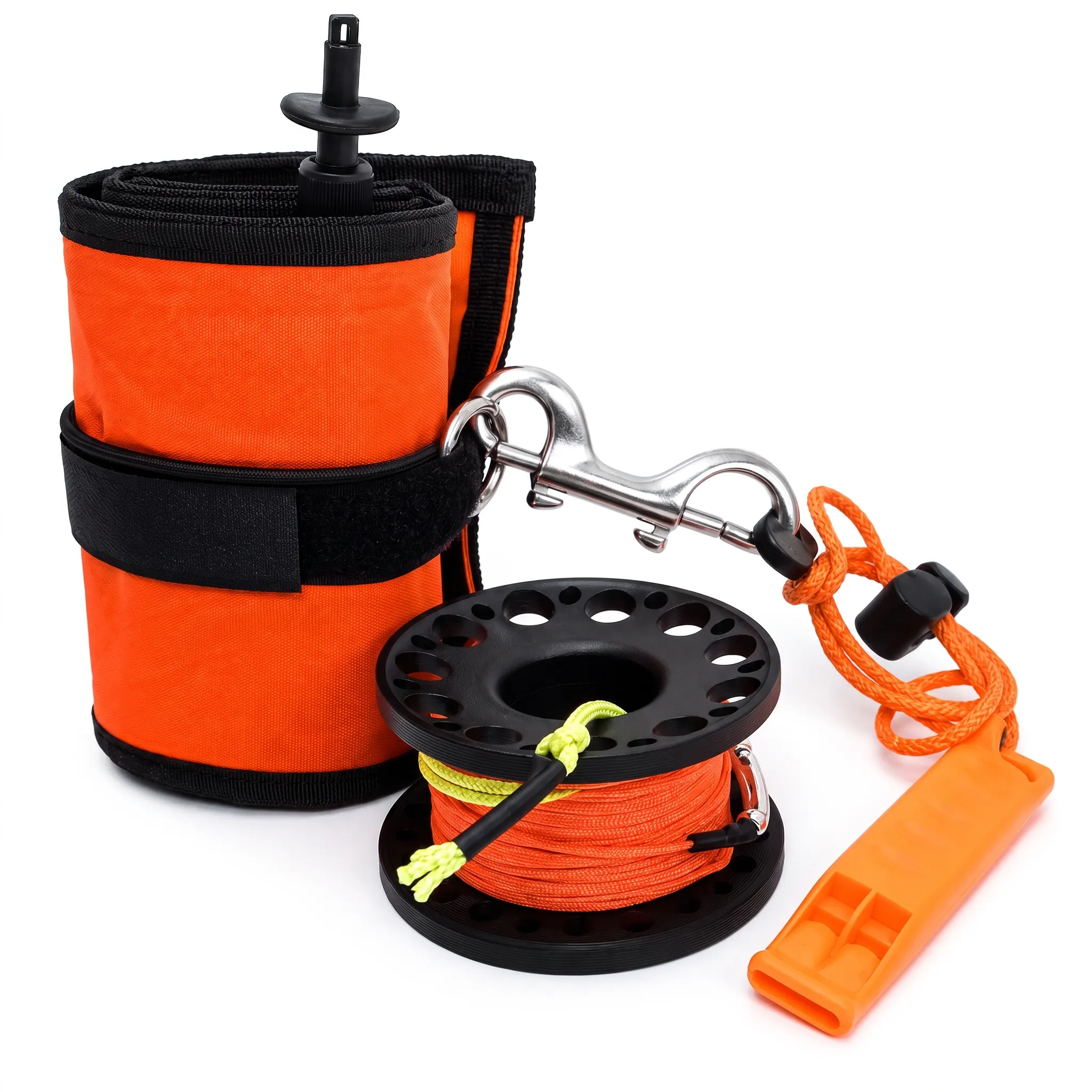
TL;DR: A DSMB with reel is an essential scuba diving safety system comprising an inflatable Delayed Surface Marker Buoy and a spool of line. Deployed from depth, it signals your position to boat traffic while providing a physical reference line for safer ascents. For UK divers, a 6ft self-sealing buoy paired with a handled reel is highly recommended over a basic finger spool to effectively manage thick drysuit gloves and challenging sea conditions.
Key Takeaways for UK Divers
- Surface Visibility is Critical: A 6ft self-sealing buoy is the minimum recommended standard for staying visible above the heavy chop and coastal swells typical of UK waters.
- Reels Beat Spools in Cold Water: A dedicated 98ft (30m) reel provides superior line management and control when wearing thick neoprene or drysuit gloves compared to basic finger spools.
- Prevent Uncontrolled Ascents: Deploying a DSMB with reel from depth (typically 15–20 metres) gives you a visual and physical reference line to execute accurate buoyancy control and mandatory safety stops.
- Marine-Grade Hardware is Essential: Always choose 316 stainless steel bolt snaps and internal mechanisms to resist the harsh saltwater environments of the North Sea, English Channel, and Irish Sea.
A dsmb with reel is a vital piece of scuba diving safety equipment consisting of an inflatable surface marker tube connected to a line reel, deployed from underwater to signal your position to boats before you ascend. Hovering at 20 metres off the Portland coast in the English Channel presents a familiar challenge for British scuba divers. The visibility is a murky three metres, a tidal pull is beginning to build, and you have a mandatory three-minute safety stop to execute before surfacing into a shipping lane frequented by fishing trawlers and rigid inflatable boats (RIBs). Consequently, in these demanding conditions, this setup is not just a standard piece of training kit; it is the single most critical safety tool keeping you connected to your surface support and visible to boat skippers.
While tropical reef diving often relies on dive guides to manage surface markers, UK diving demands complete self-sufficiency. Furthermore, whether you are navigating the historic wrecks of Scapa Flow, drift diving off the Farne Islands, or training in the chilly waters of Stoney Cove, mastering the deployment of a delayed surface marker buoy (DSMB) paired with a robust reel is essential. Based on our extensive testing of dive gear at ScubaSMB, this guide explores everything UK buyers need to know about selecting, configuring, and deploying a system designed specifically for unpredictable British waters.
What is a DSMB with a Reel Used For?
A Delayed Surface Marker Buoy (DSMB) is an inflatable tube deployed by a diver from depth to signal their position to surface support before ascending. Unlike a standard Surface Marker Buoy (SMB)—which is inflated at the surface and towed throughout the entire dive—a DSMB is carried compactly in a drysuit pocket or clipped to a buoyancy compensation device (BCD) until it is needed at the end of the dive.
Crucially, when paired with a dedicated diving reel, the DSMB transforms into a comprehensive ascent management system. The reel holds a designated length of line—typically 98ft (30 metres) for standard recreational coastal diving—allowing you to send the buoy to the surface while remaining safely at your decompression or safety stop depth. Once the buoy breaks the surface, the taut line acts as a visual reference and a physical guide. As a result, it helps you maintain a precise ascent rate through mid-water where visual references are entirely absent.
Understanding the distinction between basic surface markers and deployment systems is vital for kit assembly. For a foundational overview of surface marker terminology and general British diving requirements, consult the ultimate guide to diving SMBs in the UK, which outlines how regional tidal conditions dictate your choice of safety equipment.
Why Use a Reel Instead of a Spool for Scuba Diving?
Many divers completing their entry-level certifications in warm, clear waters are taught to deploy a small buoy using a simple plastic finger spool. While lightweight spools certainly have their place in travel diving, they present severe operational limitations in cold UK marine environments.
How Do Drysuit Gloves Affect Reel Choice?
Diving in the UK almost universally requires thermal protection in the form of thick neoprene gloves or dryglove ring systems. Trying to manipulate a bare plastic spool, hold a dive torch, and manage line tension with numb fingers or bulky 5mm gloves frequently leads to dropped equipment, line entanglements, or jammed spools. Conversely, a structured dsmb with reel kit features an ergonomic handle and a dedicated winding knob. Based on our field testing, this design allows you to maintain a secure grip and smoothly retrieve line even when wearing thick winter drygloves.
How Does a Reel Help with Drift Diving and Mid-Water Ascents?
Many of Britain’s premier dive sites, such as the drift dives through the Menai Strait or along the Dorset coastline, rely on fast-moving tidal currents. When ascending in a drift, you are moving horizontally through the water column while trying to control your vertical ascent rate. A sturdy reel allows you to lock off the line at specific depths, creating a stable platform for your buddy pair to complete safety stops without being separated by differential currents.
To understand the specific physical dimensions required to remain visible above ocean swells during these drifts, take a look at our detailed breakdown in the 6ft scuba SMB explained guide.
Why is a DSMB Important for Safety Stops?
Equipment failure and poor buoyancy control during ascents remain primary contributors to diving emergencies in British waters. According to official UK guidelines and the annual British Sub-Aqua Club (BSAC) Diving Incident Report, incidents involving ascents—including rapid uncontrolled ascents, missed decompression stops, and loss of buoyancy control—consistently account for over 30% of all reported UK diving accidents. Furthermore, separation between divers or from the surface cover vessel forms another major incident category reported to the Royal National Lifeboat Institution (RNLI) and HM Coastguard each season.
Deploying a dsmb with reel directly addresses these statistical risks. By inflating your buoy at 15 to 20 metres, you alert the surface cover boat to your exact location five to ten minutes before you break the surface. This lead time is crucial for skippers navigating high seas or busy boat channels, ensuring they can manoeuvre into position to pick you up the moment you head up to the surface.
"A delayed surface marker buoy is your primary line of communication with the surface. In UK coastal waters, where surface visibility can change in minutes due to fog or squalls, a deployed buoy with a taut line is often the difference between a routine pickup and a multi-agency search operation."
How to Choose the Best DSMB and Reel Setup for UK Waters?
Not all surface marker buoys are built to withstand the rigours of North Atlantic diving. In our professional experience evaluating dive gear for ScubaSMB, when evaluating a dsmb with reel for UK diving, you must examine the specific components that ensure reliability in harsh environments.
Should I Choose a Self-Sealing or Open-Ended DSMB?
In calm tropical lagoons, a simple open-ended tube suffices. However, in the 1-metre to 2-metre coastal chop common off the UK coastline, an open-ended buoy will frequently flop over when a wave passes, dumping its internal air and sinking back below the surface. Therefore, UK divers should exclusively use a self-sealing (closed-circuit) buoy equipped with an over-pressure valve (OPV) and an inflation baffle to guarantee the marker stays fully inflated at the surface.
Ready to upgrade your safety with ScubaSMB?
Get Yours Now — £63.99