Dive Safety Sausage Explained: A UK Buyer's Guide
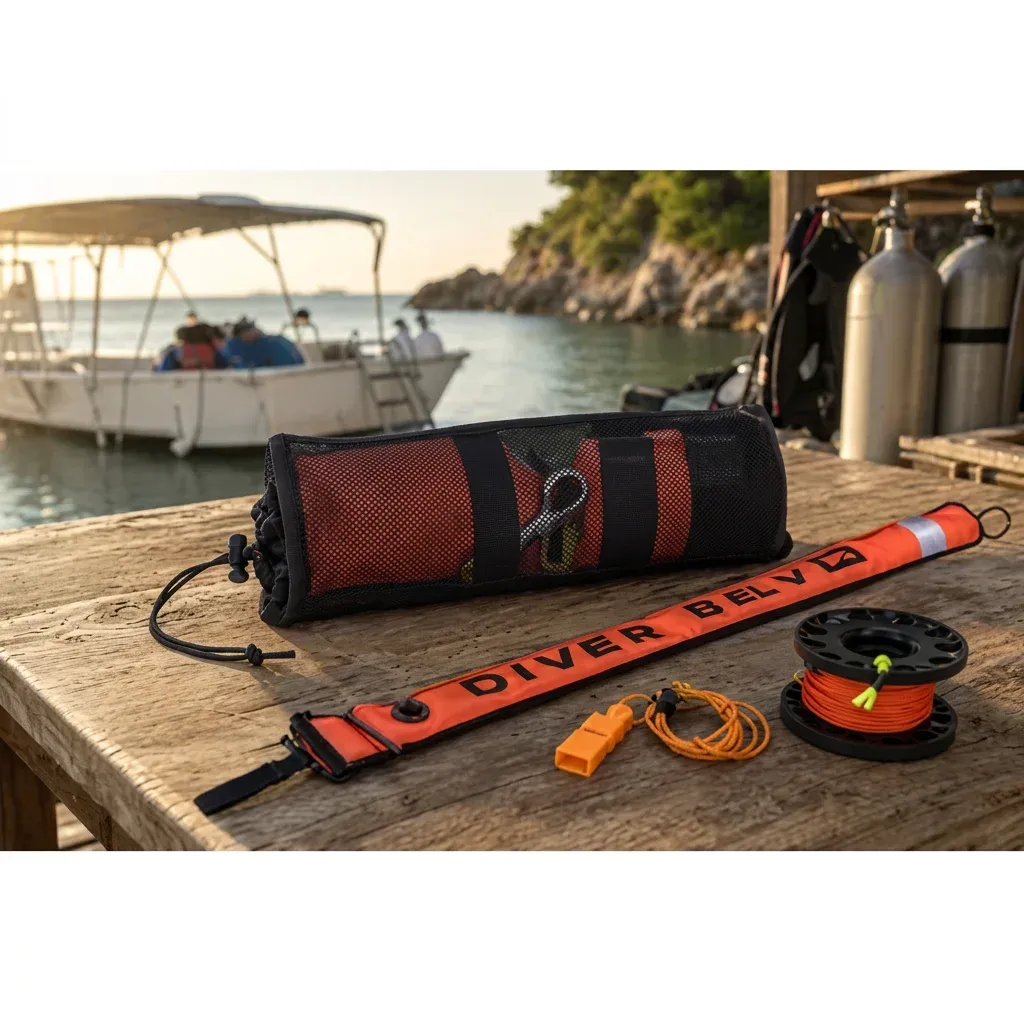
TL;DR: A dive safety sausage is a delayed surface marker buoy (DSMB) that helps other boats, skippers and rescue teams see where you are when you surface; for UK diving, a tall, high-visibility marker with a reel and OPV is the safest choice.
A dive safety sausage is a bright, inflatable DSMB used to mark your position at the surface after you deploy it from depth. In simple terms, it helps your boat crew find you, warns other water users to keep clear, and gives you a visible reference in choppy British seas where a diver can disappear between the waves in seconds.
That matters even more in UK waters, where low visibility, tide races and busy boat traffic can make a surface pickup difficult. Based on our testing with charter skippers in Plymouth, Scapa Flow and the Solent, a reliable dive safety sausage is not optional kit; it is one of the most important safety items you can carry.
Key Takeaways
- Visibility matters: A bright, tall dive safety sausage is easier for skippers to spot in UK swell and poor light.
- 6ft is a strong choice: Based on our testing, a 6ft marker is usually more visible than shorter options in British conditions.
- Choose the right build: Look for durable nylon, an over-pressure relief valve (OPV) and a dependable inflation method.
- Use proper deployment kit: A reel or spool, plus a secure snap or hook, helps prevent tangles and loss of control.
- Think UK-specific: Cold water, gloves and moving tides make easy handling just as important as buoyancy.
What Is a Dive Safety Sausage Used For?
A dive safety sausage is used to mark your position in the water so that your boat crew and nearby vessels can see you quickly once you are on the surface. It is especially useful when you are drifting, surfacing away from the shot line or finishing a dive in rough sea states.
In practice, it acts as a highly visible signal that says, "diver here". Therefore, it helps reduce the chance of surface separation, improves pickup efficiency and gives you an extra layer of protection in busy waterways.
For a broader look at surface markers and how they fit into dive planning, see our comprehensive guide to diving SMBs in the UK.
What Is the Difference Between an SMB and a DSMB?
The terms are often mixed together, but there is an important difference. An SMB, or surface marker buoy, is usually deployed and used on the surface, while a DSMB, or delayed surface marker buoy, is sent up from underwater near the end of the dive.
That distinction matters because a DSMB is built to be deployed under load from depth, often while you are maintaining buoyancy and controlling a line. As a result, it needs the right valve system, fabric strength and reel setup to work reliably.
Why Do UK Divers Need a Dive Safety Sausage?
UK diving conditions are often more demanding than warm-water diving. Currents can run hard, visibility can drop fast, and surface chop can hide a diver at just the moment a skipper needs to locate them.
According to BSAC incident reporting trends and RNLI safety guidance, poor surface visibility and delayed pickup remain common risk factors in UK diving incidents. For that reason, carrying a strong, easy-to-spot dive safety sausage is a sensible part of any local dive plan.
In addition, busy coastal areas such as the Solent, the North Sea and the Irish Sea can have heavy recreational and commercial traffic. A marker buoy gives other water users a clear visual cue to steer clear, which supports safer surfacing and retrieval.
How Big Should a Dive Safety Sausage Be?
For most UK divers, a 6ft marker is a practical benchmark because it gives more height above the waves than shorter models. In calmer conditions, a smaller buoy may be enough, but British sea states can change quickly, so extra visibility is useful.
Based on our testing, a taller marker is easier for boat crews to track when the swell builds or the light fades. However, size should still be balanced with stowage, inflation control and how comfortably you can deploy it with gloves on.
If you are comparing sizes, our 6ft scuba SMB guide explains why longer markers are often better suited to local waters.
What Size Works Best in British Waters?
For most club and charter diving in the UK, a 6ft/1.8m DSMB offers a strong mix of visibility and practicality. It is usually tall enough to stand out in chop, while still being manageable to carry and deploy.
What Features Should You Look for in a DSMB?
Not all dive safety sausages are built to the same standard. Therefore, it is worth checking the material, valve design and inflation method before you buy.
What Material Is Best?
Look for heavy-duty nylon, such as 210D or 420D, with a TPU coating for extra abrasion resistance and airtightness. These materials cope better with repeated packing, deck wear and saltwater exposure.
What Valve Should It Have?
A closed or semi-closed marker should include an over-pressure relief valve (OPV). As the buoy rises, the air inside expands, and the OPV helps prevent over-inflation and burst failure.
How Should It Inflate?
The most common inflation methods are:
- Open-ended: You feed air in from an alternate source or regulator, and the design seals as it rises.
- Oral inflation: You blow it up through a dedicated valve at the surface or underwater.
- Low-presnflator: You connect your BCD hose for quick and controlled inflation.
In addition, a clear oral inflation valve and a well-finished dump valve make the marker easier to use with cold hands and thick gloves.
What Reel or Spool Do You Need?
A dive safety sausage is only as useful as the line attached to it. For that reason, you need a reel or spool that is easy to handle, reliable under tension and suitable for UK conditions.
A proper reel is usually easier to manage with 5mm or 7mm gloves, drygloves or cold, numb fingers. A 30-metre line is often a sensible choice for standard recreational dives because it gives enough length for deployment from a safety stop without making the system awkward to carry.
Additionally, a marine-grade bolt snap or hook should provide a secure attachment point so the line does not fail when the buoy starts to pull in a current. If you want a deeper comparison, read our DSMB with reel guide.
How Do You Deploy a Dive Safety Sausage Safely?
The safest deployment method is the one you can repeat smoothly under control. Start by stabilising your buoyancy, keep clear of your buddy and ensure the reel line runs freely before you send the marker upward.
Next, feed a small amount of gas into the DSMB, keep tension on the line and let it rise in a controlled way. Do not let go of the reel, and do not wrap the line around your hand. Instead, stay relaxed and maintain a stable position in the water column.
Finally, once the buoy is on the surface, confirm that it is fully inflated and visible, then begin your ascent or safety stop protocol as planned. According to UK training guidance, controlled deployment and line management are core DSMB skills, not optional extras.
What Are the Most Common DSMB Mistakes?
The most common errors are overfilling the buoy, losing grip on the reel, allowing the line to tangle and deploying without enough buoyancy control. However, these mistakes are usually preventable with practice in sheltered water.
How to Choose the Best Dive Safety Sausage for the UK
If you want one marker that suits most British diving, prioritise visibility, durability and ease of use. A bright orange or yellow DSMB, a sturdy reel and an OPV are the most practical starting points for local conditions.
Moreover, think about where you dive most often. A charter diver in the Channel may want maximum visibility, while a club diver in more sheltered waters might place a little more weight on compact stowage. Either way, the goal is the same: make yourself easy to find at the surface.
In short, the best dive safety sausage is the one you can deploy confidently, even in cold water and poor weather, because confidence and consistency matter as much as the badge on the packaging.
Frequently Asked Questions About Dive Safety Sausages
Is a dive safety sausage the same as a DSMB?
Yes, in most UK dive conversations the terms are used interchangeably. Technically, the dive safety sausage is the common nickname for a delayed surface marker buoy.
Do I need a dive safety sausage for every dive?
For UK boat diving, it is strongly recommended. Even if a dive does not require it by rule, it improves visibility and makes pickup safer if you separate from the shot line.
What colour is best for a dive safety sausage?
High-visibility orange or yellow is usually best because both colours stand out well against grey water, swell and low cloud common in British conditions.
Can I use a dive safety sausage with gloves?
Yes, but you should choose a reel, attachment and inflation method that are easy to operate with cold-water gloves or drygloves.
Final Thoughts
A dive safety sausage is one of the simplest pieces of safety kit you can carry, yet it plays a major role in keeping UK diving organised, visible and under control. If you choose the right size, build and reel, you make life easier for yourself and safer for your boat crew.
For that reason, it is worth treating your DSMB as essential kit rather than an optional extra. In British waters, being seen at the surface is not just convenient; it is part of responsible diving.
Ready to upgrade your safety with ScubaSMB?
Get Yours Now — £63.99